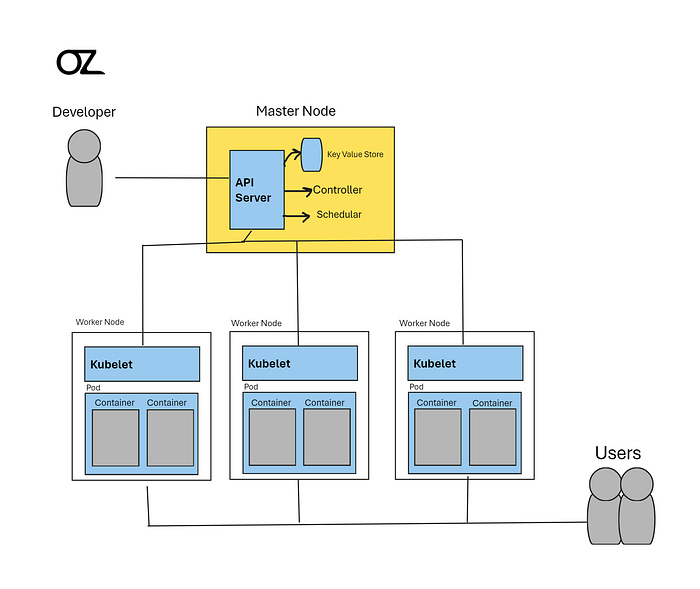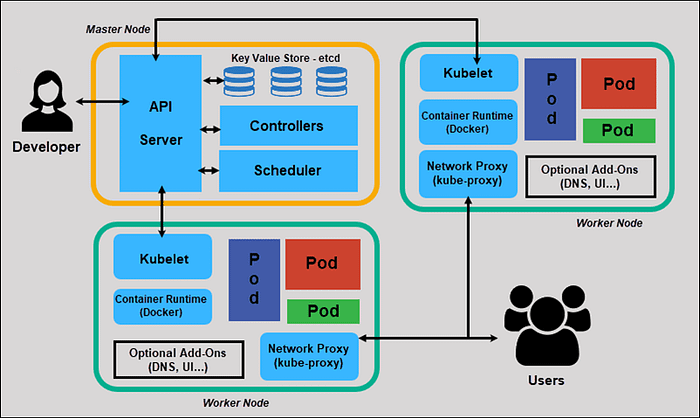
Exciting Announcement! 🎉 Prepare to Indulge Your Appetite for Knowledge! 😁
Join me on a mouthwatering journey through the world of Kubernetes, where software meets gourmet cuisine! 🍲🚀
Two days ago, my colleagues and I embarked on a challenging project, navigating the intricacies of the Development stage with skill and determination. Now, we’re gearing up to transition to the Deploy stage using a powerful tool called Containers. But wait, there’s more! We’ll be enlisting the help of Kubernetes, a software wizard that I’ll unravel for you in the most delicious way possible — through a culinary tale! 👨💻
Start of the story
Explaining Kubernetes can be as complex as mastering a new recipe. That’s why I’m taking a different approach. In a fun analogy, understanding Kubernetes is like organizing a kitchen to cook a meal. Imagine you and your siblings are culinary prodigies, tasked with creating a gourmet meal to impress your mom. Each sibling has a role, just like Kubernetes assigns tasks to containers. From appetizers to dessert, Kubernetes orchestrates the entire process, ensuring your software runs as smoothly as a well-coordinated kitchen. 👩🍳🍴
Press enter or click to view image in full size
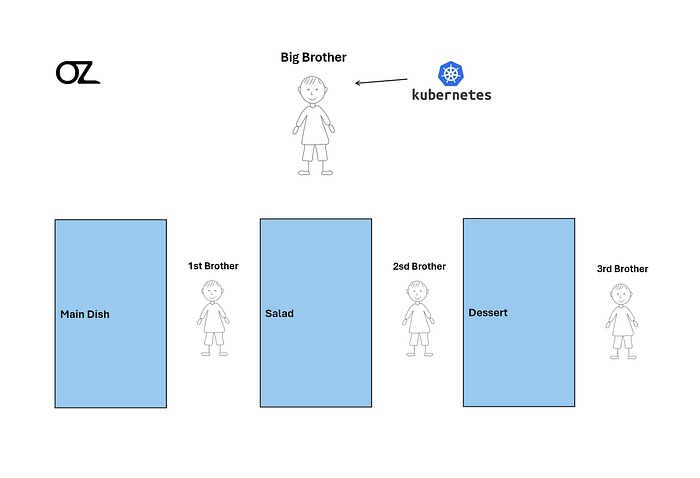
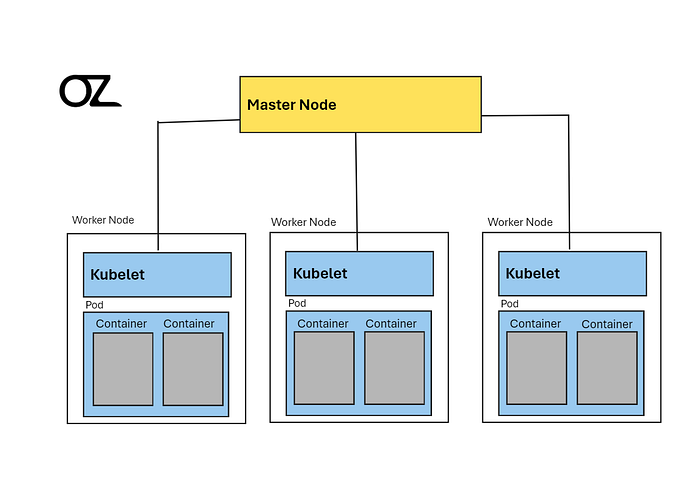
But what exactly is Kubernetes? It’s like the master chef in your software kitchen, organizing and overseeing containers (your cooking stations) to ensure everything runs seamlessly. Just as you’d divide cooking tasks among your siblings, Kubernetes divides tasks among containers, managing everything from appetizers to dessert. It scales, balances loads, and automates deployment, making it the ultimate chef in your software kitchen! 👨🍳👨🍳
If we dive into the technical definition, Kubernetes is a “container-orchestration tool,” a tool for coordinating containers. To simplify, let’s consider it an organizational tool for the chef — you! Each container represents a dish where the food (your application) will be placed. 🍽️🔧
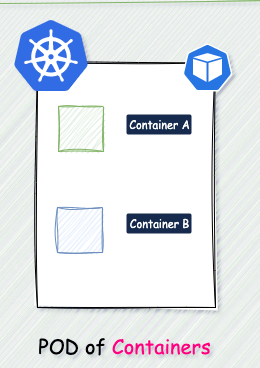
Moving on to Pods, which contain all the appetizer dishes served in the meal. Each dish serves a purpose, just like Pods work together to serve your application. They all have a common goal: to be appetizers for the main course. And just like in a meal, each Pod doesn’t interfere with the other because they are focused on their own tasks.
Now, let’s talk about the functions of Kubernetes:
1- Scaling: Like a chef adjusting the cooking pace, Kubernetes knows how to organize and run or turn off Pods based on the workload. So, if you’re running late in preparing the food, Kubernetes can speed up your work to finish quickly because the family is eagerly waiting to eat! 😋